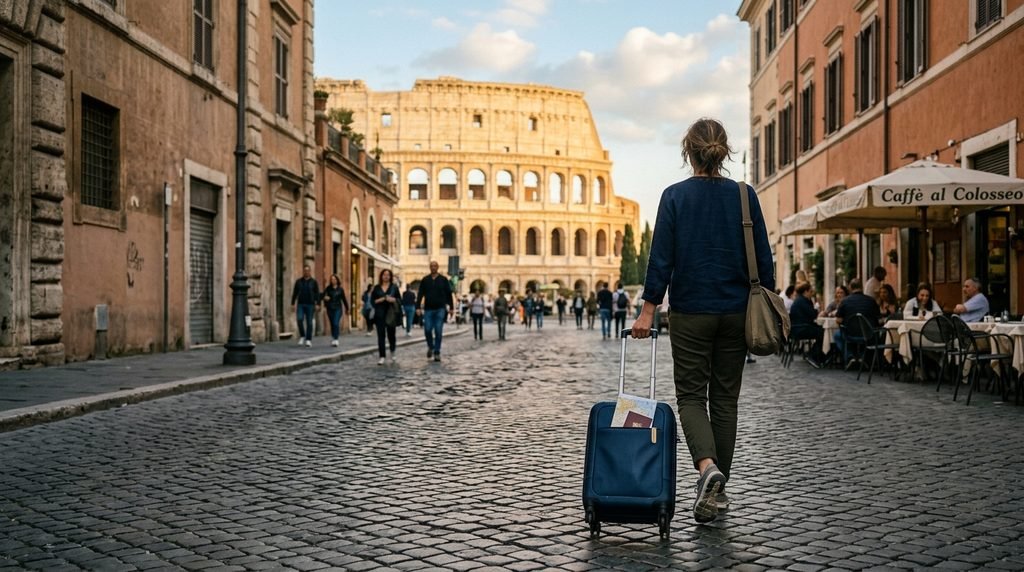
Image: Pack & Go
Italy is one of those places that can be surprisingly affordable or painfully expensive, sometimes on the same street.
You can have a great pasta lunch for €15, walk through some of the most famous sights in the world for very little money, and then discover that the hotel you wanted costs €250 a night.
So, how much should you actually budget for a trip to Italy in 2026?
For a comfortable one-week trip, I would plan on roughly €1,200–€1,900 per person, excluding international flights. That works out to about $1,400–$2,220 at current exchange rates.
You can absolutely spend less. You can also spend several times more.
The important thing is understanding where your money is going.
The quick answer: what does Italy cost?
For a seven-day trip, here’s the budget I would use as a realistic starting point:
| Expense | Budget traveler | Comfortable traveler |
|---|---|---|
| Accommodation | €350–€550 | €700–€1,100 |
| Food | €210–€300 | €350–€500 |
| Local transportation | €50–€80 | €80–€130 |
| Attractions | €50–€100 | €100–€180 |
| Intercity trains | €50–€120 | €100–€200 |
| Extras & experiences | €50–€100 | €100–€200 |
| 7-day total | €760–€1,250 | €1,430–€2,310 |
These figures don’t include the flight to Italy because that number depends enormously on where you’re flying from.
If you’re coming from New York, London, Toronto or São Paulo, your airfare could look completely different. That’s why I prefer keeping the flight separate rather than pretending there is one “average” price for everyone.
For most travelers, though, €1,400–€1,900 for seven days on the ground is a sensible middle-of-the-road target.
How much does a hotel in Italy cost?
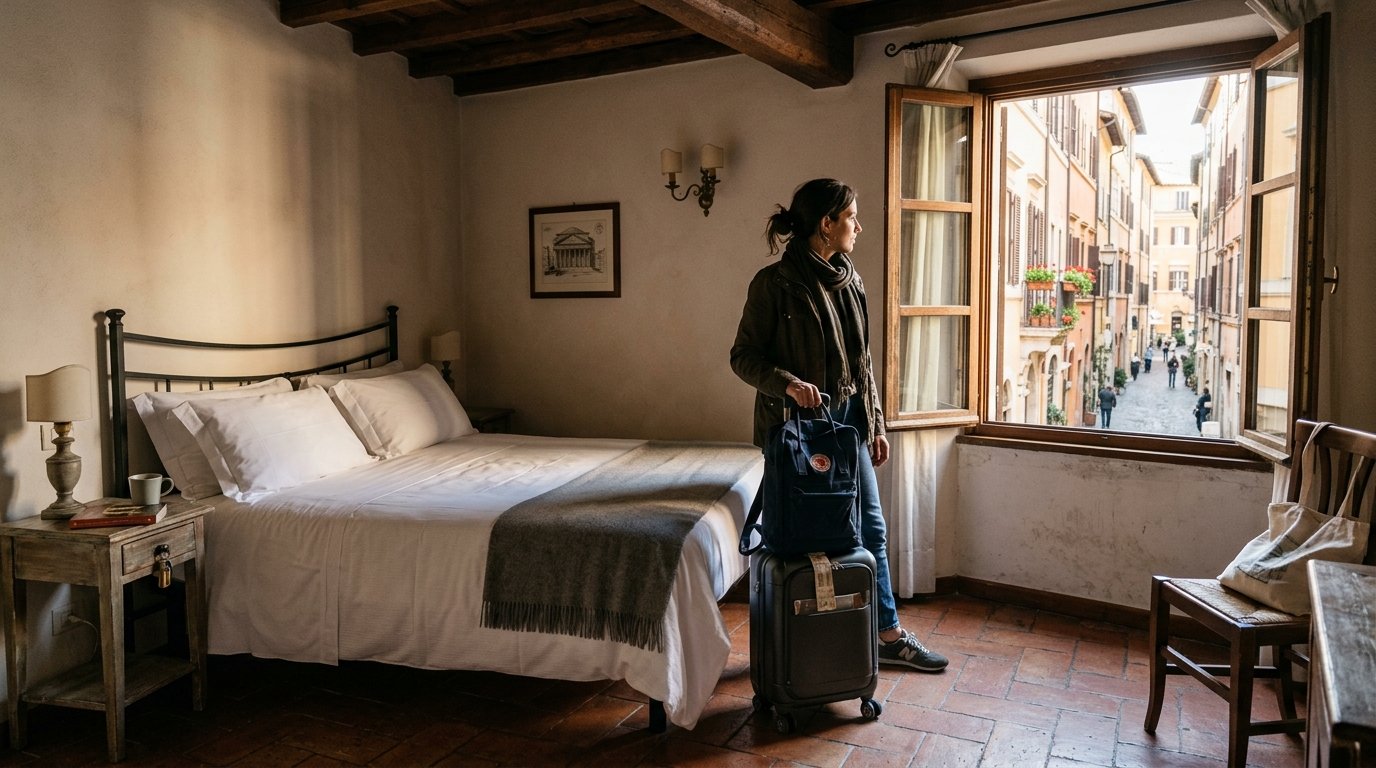
Accommodation will probably be the biggest part of your budget.
And this is where choosing the right city matters.
Rome, Venice, Florence, Milan and the Amalfi Coast can get expensive quickly, particularly during popular travel periods.
In Rome, recent 2026 hotel data shows just how wide the range can be. Budget rooms can sometimes appear around $70–$130 per night, while mid-range accommodation commonly sits around $130–$280. Luxury properties can easily go beyond $280 per night.
Another current Rome hotel dataset puts the median nightly asking price at around $205, with half of the measured properties between roughly $159 and $254.
So if you’re planning seven nights in Rome, I wouldn’t build your budget around finding a €50 hotel room in the historic center.
A more realistic target is:
- Budget: €70–€100 per night
- Comfortable: €120–€180
- Nicer central hotel: €200–€300+
- Luxury: €300+
And there’s another small cost people often forget: the tourist tax.
Rome charges a tourist accommodation tax based on the type of property and the number of nights. The city calculates it per person, and the amount can therefore add a noticeable extra cost to a week’s stay.
My advice? When comparing hotels, always look at the final price, not just the headline nightly rate.
What does food cost in Italy?
This is one area where Italy doesn’t have to destroy your budget.
You don’t need to eat at expensive restaurants every night to eat well.
In Rome, current price data puts an inexpensive restaurant meal at around €15, while a three-course meal for two at a mid-range restaurant averages around €60, before drinks. A cappuccino is around €2, while bottled water is roughly €1.30.
That means I would budget roughly:
€30–€45 per day if you’re being careful.
€50–€75 per day for a comfortable trip.
€80–€120+ per day if restaurants and wine are a major part of the experience.
And honestly, I wouldn’t try to save money by eating badly in Italy.
One of the easiest ways to keep your food budget under control is to make lunch your bigger meal and keep dinner more casual.
Grab a panino, pizza al taglio or pasta for lunch, stop for an espresso, and then spend a little more on dinner.
That’s usually a better travel experience than trying to survive on supermarket food just to save €10.
How much does transportation cost?
Italy is relatively easy to explore without renting a car, especially if your trip focuses on major cities.
In Rome, a standard public transportation ticket currently costs €1.50 and is valid for 100 minutes. There are also 24-hour, 48-hour and 72-hour passes costing €8.50, €15 and €22 respectively. A seven-day integrated Rome pass costs €29.
That’s good news for your budget.
If you’re staying in Rome for three or four days, you can spend surprisingly little on transportation, especially if you’re comfortable walking.
And you should walk.
Rome is one of those cities where the walk between two attractions can be part of the attraction itself.
For traveling between cities, high-speed trains are usually the easiest option. Prices vary significantly depending on the route, date and how early you book, so I would reserve your intercity trains separately in your planning rather than assigning one fixed national price.
For a Rome–Florence–Venice trip, I’d personally reserve €100–€200 for intercity rail unless you’ve already found specific fares.
How much do attractions cost?
This is another reason Italy can be less expensive than you might expect.
Some of the country’s best experiences are completely free.
Walking through Rome’s historic center costs nothing. So does seeing the Trevi Fountain, Piazza Navona, the Spanish Steps and many of the city’s famous streets and squares.
But the major attractions do add up.
For example, the official Colosseum ticket covering the Colosseum, Roman Forum and Palatine is currently €18, while the Full Experience Arena ticket is €24. Reservations are required for Colosseum entry, and the archaeological park says ticket sales open 30 days before the visit date.
The Vatican Museums are another major expense. The standard full ticket is €20, or €25 when booked through the official Vatican Museums website with the online reservation.
So, for a first trip to Rome, I would put aside around €50–€100 per person for major attractions.
If you want guided tours, special access or several museums, increase that number.
What can you actually do in Italy for €100 a day?
This is where travel budgets become more useful.
Let’s say your accommodation is already paid for and you have €100 to spend on a day in Rome.
You could have:
- €15 breakfast and coffee
- €20–€25 lunch
- €18 Colosseum ticket
- €1.50–€3 public transportation
- €20–€30 dinner
- €10–€20 for gelato, drinks or a small experience
That’s a genuinely good day in Rome.
You aren’t living like royalty, but you’re also not traveling miserably.
And on another day, you could spend even less.
Walk through the historic center. Visit the Trevi Fountain. Explore Piazza Navona. Wander around Trastevere. Sit somewhere with an espresso.
Your biggest expense might be dinner.
This is one of the things I like about Italy: you don’t need to constantly pay for an attraction to feel like you’re experiencing the destination.
What does a 7-day Italy trip actually look like?
If it were my first trip to Italy, I wouldn’t try to see six cities in seven days.
I’d choose three.
For example:
Days 1–3: Rome
Spend your first three days exploring ancient Rome, the Vatican, Trastevere and the historic center.
Days 4–5: Florence
Take the train north and spend two days walking through Florence, visiting the Duomo area, Uffizi Gallery and enjoying the food.
Days 6–7: Venice
Finish in Venice.
Get lost in the smaller streets, visit St. Mark’s Square, take a vaporetto and give yourself time to simply wander.
This isn’t the cheapest possible itinerary, because moving between three cities adds transportation costs.
But for a first trip, I think it’s a much better use of seven days than spending half your vacation sitting on trains.
So, how much money would I take?
For a comfortable seven-day trip, excluding international airfare, I would personally aim for around:
€1,600 per person
Here’s how I’d roughly divide it:
Accommodation: €800
Food: €350
Transportation: €150
Attractions: €120
Extra experiences: €100
Buffer: €80
That’s not a luxury trip.
It’s a trip where I wouldn’t have to question every €5 purchase.
If you’re traveling as a couple and sharing a hotel room, your per-person accommodation cost can also fall significantly.
On the other hand, if you’re traveling during peak summer, staying directly beside major attractions or choosing high-end restaurants every night, €1,600 won’t go nearly as far.
Can you visit Italy for less than €1,000?
Yes.
But I wouldn’t recommend planning around that number unless you’re comfortable traveling on a tight budget.
You’d probably need cheaper accommodation, fewer paid attractions, inexpensive meals and careful transportation planning.
Southern Italy and some less tourist-heavy destinations can also be considerably easier on the wallet than places such as Venice, Florence or the Amalfi Coast.
And that’s an important point about Italy:
“How much does Italy cost?” isn’t really one question.
Rome isn’t Sicily.
Venice isn’t Naples.
Milan isn’t Puglia.
The destination you choose can change the entire budget.
Is Italy worth the money?
For me, yes.
Italy is expensive enough that I wouldn’t book the trip without knowing my numbers first. But once you understand where your money is going, it becomes much easier to control the cost.
You don’t need a €300 hotel room.
You don’t need a €100 dinner every night.
You don’t need to pay for an attraction every few hours.
You need a good base, a realistic food budget, a few experiences you genuinely care about and enough room in your budget to say yes when something unexpected comes along.
That’s how I’d approach Italy in 2026.
If you’re planning seven days, I’d start with about €1,600 per person on the ground, then add your international flight on top.
And before booking anything, check the actual prices for your dates. Hotel rates, train fares and flights can move considerably depending on the season.
Because that’s really the point of planning a trip properly:
Don’t just ask where you want to go. Ask what it will actually cost to get there.
Prices checked in August 2026. Accommodation and transportation prices are variable and should be checked again for your exact dates before booking.