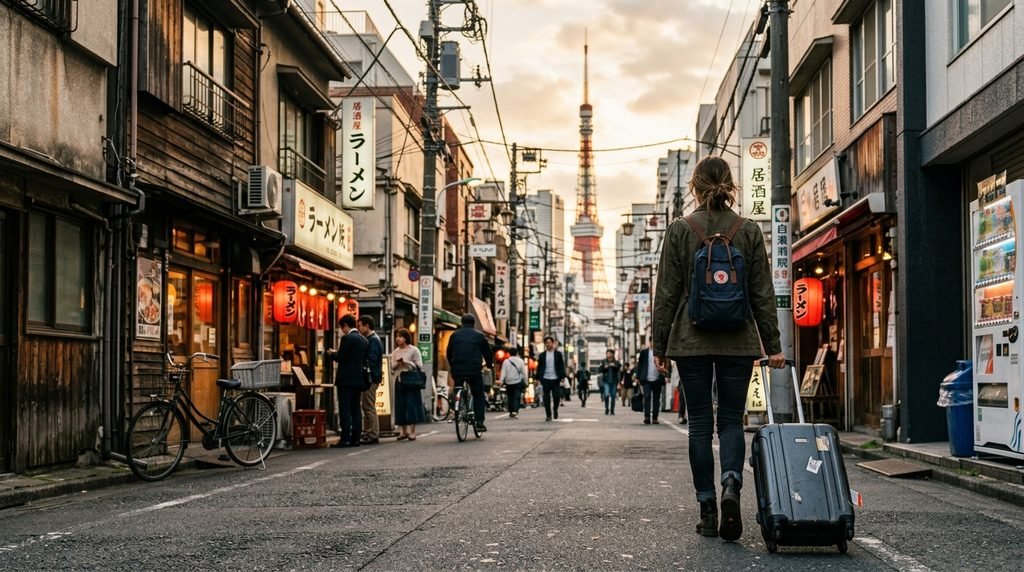
Japan has a reputation for being expensive.
And honestly, I understand why.
You picture Tokyo hotels, bullet trains, sushi restaurants, Kyoto temples, taxis, shopping and a 12-hour flight before you’ve even left home. It sounds like the kind of trip that could eat through your savings very quickly.
But here’s the interesting part: Japan isn’t necessarily as expensive as people expect.
The expensive parts of the trip are usually the things you choose to make expensive.
You can spend ¥30,000 on dinner if you want to. You can also have an excellent meal for ¥1,000 or less.
You can stay in a beautiful hotel for ¥30,000 a night, or find a perfectly comfortable room for a fraction of that.
So, how much would I actually budget for Japan in 2026?
For a 10-day trip covering Tokyo and Kyoto, I would plan for roughly ¥180,000–¥300,000 per person on the ground, excluding international flights.
That’s approximately $1,130–$1,880, using an exchange rate around ¥159 to US$1.
If you want nicer hotels, more expensive restaurants, shopping and several premium experiences, I’d move that closer to ¥350,000–¥500,000.
The good news is that you don’t need the second number to have an incredible trip.
The quick answer: what does Japan cost?
Here’s the budget I would use as a starting point for 10 days in Japan:
| Expense | Budget traveler | Comfortable traveler |
|---|---|---|
| Accommodation | ¥45,000–¥75,000 | ¥90,000–¥150,000 |
| Food | ¥30,000–¥45,000 | ¥50,000–¥75,000 |
| Transportation | ¥20,000–¥30,000 | ¥30,000–¥45,000 |
| Attractions | ¥8,000–¥15,000 | ¥15,000–¥30,000 |
| Experiences & extras | ¥10,000–¥20,000 | ¥20,000–¥40,000 |
| Total | ¥113,000–¥185,000 | ¥205,000–¥340,000 |
These numbers are for one person and exclude the international flight.
I’d personally target around ¥250,000–¥280,000 for a comfortable 10-day trip.
That gives you enough breathing room to eat well, see the major attractions, use trains without constantly checking your balance and have a few experiences that you didn’t plan six months in advance.
And that’s important.
A travel budget shouldn’t be so tight that every unexpected ¥1,000 purchase ruins your day.
How much are hotels in Japan?
Accommodation is one of the biggest variables in your Japan budget.
Tokyo alone can give you an enormous range of prices.
Current 2026 travel cost data puts budget accommodation in Tokyo around ¥4,000–¥6,000 per night, while mid-range hotels can be around ¥11,000–¥20,000 per night. More comfortable hotels can quickly move into the ¥30,000–¥50,000 range.
That means a couple traveling together can sometimes get surprisingly good value by sharing a room.
For a solo traveler, accommodation hurts a little more because you’re carrying the entire room cost yourself.
For 10 nights, I’d roughly plan:
Budget: ¥45,000–¥75,000
Mid-range: ¥90,000–¥150,000
Comfortable: ¥180,000+
And I wouldn’t automatically book the cheapest room I can find.
Location matters.
In Tokyo, staying close to a convenient train or subway station can save you time every single day. Paying another ¥2,000 for a better-located hotel may actually be worth it if it means you’re not spending an hour commuting back and forth.
This is one of those cases where I would rather spend slightly more on the hotel and less on transportation and lost time.
What does food cost in Japan?
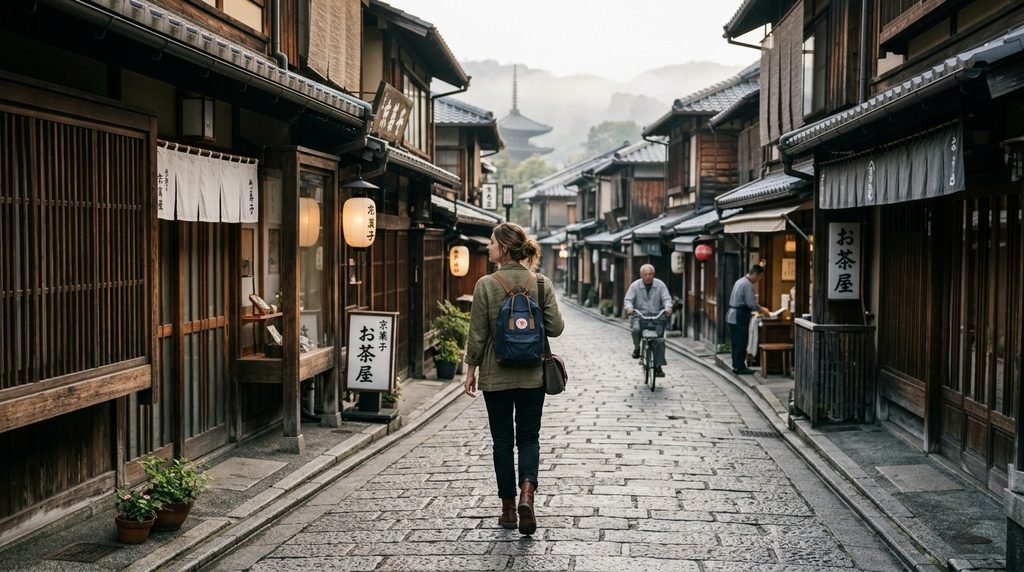
This is where Japan can surprise you.
You don’t have to eat at expensive sushi restaurants every night.
In fact, some of my favorite types of meals to recommend for a first-time visitor are the simple ones: ramen shops, curry restaurants, donburi, udon, conveyor-belt sushi and small local restaurants.
A 2026 Tokyo budget guide estimates that a budget traveler can eat for roughly ¥2,500–¥3,500 per day, while a comfortable traveler might spend around ¥5,000–¥8,000.
So I would budget:
¥3,000–¥4,000 per day if you’re watching your spending.
¥5,000–¥7,500 per day for a comfortable trip.
¥10,000+ per day if food is one of your main reasons for visiting Japan.
And honestly, I wouldn’t try too hard to save money on food.
Japan is one of those countries where eating cheaply doesn’t necessarily mean eating badly.
You can walk into a small ramen shop, order a bowl, sit down and have a meal that costs less than what you might pay for a sandwich and coffee in some European capitals.
The trick is not to assume that every meal needs to be an experience.
Save your money for the dinner you really want.
How much does transportation cost?
Tokyo’s public transportation system is one of the reasons the city is relatively manageable on a budget.
You don’t need taxis everywhere.
You probably shouldn’t use taxis everywhere.
The subway and train networks are extensive, and most travelers can get around Tokyo efficiently using an IC card and paying for individual journeys.
If you’re spending several days in the city, there are also passes designed for tourists. Tokyo Skytree currently lists a 24-hour Tokyo Subway Ticket package starting at ¥2,350, although the best option depends on how much you’re actually traveling.
For a 10-day Tokyo + Kyoto trip, I’d reserve around ¥20,000–¥30,000 for transportation if you’re traveling reasonably efficiently.
The number can rise if you take several long-distance trips, use taxis frequently or make additional day trips.
And what about the famous bullet train?
This is where people sometimes make a mistake.
They hear “Japan” and immediately assume they need a nationwide Japan Rail Pass.
You might not.
If you’re doing Tokyo → Kyoto → Tokyo and then flying home, buying individual tickets can make more sense depending on your itinerary.
The Japan Rail Pass is useful for some routes, but it shouldn’t be treated as an automatic purchase simply because you’re visiting Japan.
For this itinerary, I’d budget the Tokyo–Kyoto train separately and then compare the actual cost of your planned routes before buying any pass.
That’s a very Pack & Go way of looking at it:
Don’t buy the pass because someone told you Japan requires one. Buy it if your numbers say it makes sense.
What can you do in Tokyo for free?
Quite a lot.
And this is one of the reasons Tokyo can work surprisingly well for a moderate budget.
You can walk through Shibuya, explore Harajuku, visit Meiji Jingu, wander through Asakusa and see Senso-ji, explore parts of Ueno and spend hours walking through different neighborhoods without paying an admission fee.
Tokyo is also a city where simply being outside is part of the experience.
You don’t need an attraction ticket every afternoon.
That matters because your budget can quickly get out of control if you treat every famous place as something you need to buy a ticket for.
Then, when there’s something you genuinely want to see, spend the money.
For example, Tokyo Skytree currently starts at ¥1,800 for the Tembo Deck and ¥3,000 for the combined Tembo Deck and Tembo Galleria ticket.
teamLab Borderless is another popular experience, but its adult ticket uses dynamic pricing. Current official pricing starts at ¥3,600, with the exact price depending on the date.
So I’d put roughly ¥8,000–¥15,000 aside for major attractions if you’re selective.
If you’re the kind of traveler who wants to visit Disney, teamLab, observation decks, museums and paid tours, increase that considerably.
And what about Kyoto?
Kyoto changes the rhythm of the trip.
Tokyo feels enormous, fast and almost overwhelming at first.
Kyoto is slower.
You can spend a morning walking through traditional streets, visit a temple, stop for lunch and then spend the afternoon wandering around another neighborhood without feeling like you need to “complete” the city.
Many temples and attractions are inexpensive compared with major theme parks or large international attractions.
But Kyoto can become expensive when you add private tours, taxis and premium restaurants.
I’d budget around ¥5,000–¥10,000 per day for food, transportation and sightseeing in Kyoto, depending on your style.
And here’s one place where I would spend the extra money:
Go early.
You don’t necessarily need an expensive tour to have a memorable Kyoto experience.
Getting out before the crowds can completely change how a famous temple or neighborhood feels.
What does $100 a day get you in Japan?
This is probably the question I would ask before planning the trip.
Let’s say you have roughly ¥15,000–¥16,000 to spend on a day, excluding your hotel.
That’s a very workable budget.
You could have:
Breakfast: ¥700–¥1,000
Lunch: ¥1,000–¥1,500
Transportation: ¥1,000–¥1,500
Attraction: ¥1,500–¥3,500
Dinner: ¥2,000–¥3,500
Coffee, snacks and extras: ¥1,000–¥2,000
And you’d still have some room left.
That doesn’t mean you should spend exactly that amount every day.
Some days you’ll spend much less.
Other days you’ll spend much more.
That’s actually how I would structure the budget.
Have inexpensive days and expensive days rather than trying to make every day cost exactly the same.
What would I do with 10 days?
For a first trip, I’d keep it simple.
Days 1–5: Tokyo
Stay somewhere with easy access to the train or subway.
Explore Shibuya and Harajuku.
Visit Meiji Jingu.
Spend time in Asakusa and Senso-ji.
Explore Ueno.
Choose one or two paid experiences, such as teamLab Borderless or Tokyo Skytree.
And leave at least one afternoon with absolutely no plan.
Days 6–9: Kyoto
Take the train to Kyoto.
Visit Fushimi Inari early.
Explore Gion and the traditional streets.
Spend time around Kiyomizu-dera.
Visit Arashiyama.
Have one slower day where you simply walk, eat and explore.
Day 10: Departure
Depending on your flight, either leave from Kansai International Airport or return to Tokyo if your itinerary requires it.
If possible, I’d actually book an open-jaw flight and arrive in Tokyo and depart from Osaka.
It can save you the trouble of backtracking, although you need to compare the airfare difference before deciding.
How much money should you actually take to Japan?
If I were planning this trip today, I’d use ¥250,000 as my comfortable starting budget for 10 days, excluding international flights.
Something like this:
Accommodation: ¥110,000
Food: ¥55,000
Transportation: ¥30,000
Attractions: ¥20,000
Experiences: ¥15,000
Shopping, snacks and buffer: ¥20,000
Total: ¥250,000
That’s roughly $1,570 at an exchange rate around ¥159 per US dollar.
You could do it for less.
A lot less, actually.
A recent 2026 Tokyo cost analysis puts a seven-day budget traveler at around ¥85,000–¥120,000 excluding flights, while a mid-range traveler is around ¥175,000–¥280,000.
But remember that our example includes 10 days and both Tokyo and Kyoto, so transportation and accommodation naturally push the total higher.
Can you visit Japan for $2,000?
Yes.
And this is where I think Japan becomes interesting.
If your $2,000 includes everything, including your international flight, the answer depends heavily on where you’re flying from.
A traveler flying from a nearby Asian country has a completely different problem from someone flying from the United States, Europe or South America.
If your $2,000 is just your spending money once you arrive, though?
Absolutely.
You can have a very good 10-day trip with that amount.
If your $2,000 needs to cover the flight as well, I’d start looking at airfare first.
The flight is one of the few expenses you can’t easily “hack” once your dates are fixed.
Where should you spend and where should you save?
If I had to divide the budget into priorities, I’d do it like this:
Spend on:
A well-located hotel.
One or two memorable experiences.
Good meals you actually care about.
Convenient transportation.
Save on:
Taxis.
Overpriced tourist restaurants.
Buying every attraction ticket available.
Changing hotels constantly.
Souvenirs you didn’t originally want.
And don’t underestimate the cost of shopping.
Japan is dangerous for your budget in a completely different way.
You may arrive planning to buy nothing and leave with a suitcase full of snacks, stationery, anime figures, skincare products, kitchen knives and things you somehow convinced yourself you absolutely needed.
Leave some money for that.
So, is Japan expensive?
Yes.
And no.
It’s expensive if you want it to be.
But the everyday experience of Japan can be remarkably manageable.
You can eat well without spending a fortune.
You can use public transportation instead of taxis.
You can spend an entire day exploring neighborhoods without buying a single attraction ticket.
And you can choose where to splurge instead of letting every part of the trip become expensive.
For a 10-day Tokyo and Kyoto trip in 2026, I’d personally aim for around:
¥250,000 per person
or roughly $1,570, excluding international airfare.
If you’re traveling on a tight budget, you could push that closer to ¥150,000–¥180,000.
If you want nicer hotels, premium dining and plenty of paid experiences, I’d be more comfortable with ¥300,000–¥400,000+.
The important thing is that Japan doesn’t have to be the financial nightmare people sometimes imagine.
You just need to decide what matters to you before you start spending.
And if I were planning the trip, I’d rather spend ¥3,500 on an experience I’ll remember for years than spend ¥3,500 every day simply because I didn’t plan ahead.
That’s the difference between a cheap trip and a smart trip.
Prices checked in August 2026. Hotel rates, airfare, train fares and attraction prices can change by date, season and availability. Always check the current price for your exact travel dates before booking.